Waning Crescent
Born under a Waning Crescent
What the sky was doing
In the last few days before a new Moon, the lit sliver has slipped round to the left and grown very thin. The Moon rose in the small hours of your birthday and was still up, pale and low, when the Sun came over the horizon. If anybody saw it that day, they most likely saw it in the morning rather than at night.
It is the least noticed shape in the whole cycle. A waning crescent is competing with dawn, sitting close to the Sun in the sky, and it fades from view long before most people are awake enough to look for it. Anyone born under it arrived while the month was quietly finishing itself off.
You can sometimes see the rest of the disc faintly filled in behind the crescent, lit by sunlight bouncing off the Earth. The old name for that is earthshine, and it is a good picture of this phase: most of the light present is reflected from somewhere else and easy to miss.
Themes the tradition gives this phase
Lunar folklore reads the Waning Crescent as the phase of surrender and of rest. The month's work is done, nothing more is being gathered, and the tradition frames that as a temperament comfortable with letting things be finished. People born here often say they knew a chapter was over long before anybody else in the room did.
The keyword usually attached is interiority. This is the most inward of the eight shapes, and the reading given to it is a person whose real life happens a little way behind their face. That is not secrecy. It is simply that a great deal is processed before any of it is spoken.
There is also a strong association with mercy. Something that has already been released is easier to be gentle about, and this phase is often described as slow to hold a grudge, partly because it lets go of the details early. People with this birthday frequently report that they forgive faster than they forget, and that the two are not the same act.
The shadow the tradition names is drift. A phase built for rest can rest past the point of usefulness, and the very same instinct that closes a chapter cleanly can close one that had life left in it. Knowing the difference is the lifelong work here.
Love and relationships
Waning Crescent people tend to love quietly and attentively. The tradition describes a partner who notices tiredness before it is mentioned and who offers ease rather than advice, and that is a rarer thing than it sounds.
The difficulty reported most often is being read as distant. Somebody who is thinking a matter through in silence looks, from the outside, exactly like somebody who has stopped caring. Saying the sentence out loud, even a rough version of it, saves a great deal of unnecessary worry on the other side.
This phase also has a habit of releasing early. If a relationship becomes hard, the instinct is to start making peace with its ending while it is still very much alive. The counsel from the tradition is to check whether you are accepting something or avoiding it, because from the inside those two feel almost identical.
You do well with someone patient with silence, who does not read quiet as a problem to be solved, and who will ask a direct question when they genuinely want an answer.
Work and purpose
The work associated with this phase is closing work: winding things up, tidying what others abandoned, care at the end of a process, archives, editing, restoration, and any role where the task is to bring something to a proper finish. Waning Crescent temperaments are unusually good at the last ten per cent, which is the part most people find unbearable.
Energy here is genuinely cyclical rather than constant, and the tradition is unusually blunt about it. This phase does not do sustained output at a flat level. It does deep stretches followed by real recovery, and a working life built to pretend otherwise tends to end badly.
Purpose is often found late and found inwardly. Many people with this birthday describe a long stretch of feeling behind their peers, followed by a settling that arrives when they stop trying to run somebody else's timetable. The tradition does not treat that as a delay. It treats it as the phase behaving exactly as it should.
How to work with this light
Once a month your own sky returns, and it asks almost nothing of you. The practice recommended for this phase is deliberate emptiness: a cleared evening, a walk with no purpose, a day with nothing to show for it. Waning Crescent people very often report that a protected quiet day resets more than a holiday does.
Use the last three days of the lunar month for review rather than plans. Look back at what the month actually did, forgive the parts that went badly, and put down anything you have been carrying out of habit. The new Moon that follows is the place for beginnings, and it goes better with empty hands.
Finally, treat your rest as work rather than as a reward for work. This phase gives its best after being left alone, and building that in on purpose turns the pattern from something that keeps happening to you into something you are using.
A card to draw for this phase
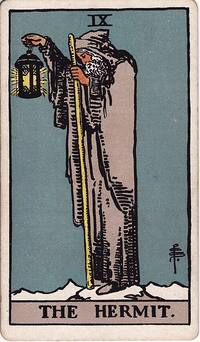
The Hermit stands alone on high ground with a lantern, lighting only the next step. It is the card of withdrawal chosen rather than suffered, of counsel that comes from having sat with a thing long enough, and of light carried quietly instead of held up for show. Draw it when you need to know whether your quiet is rest or avoidance.
Questions people ask
Is a Waning Crescent birthday a sad one?
The tradition reads it as reflective rather than sad. It is the rest at the end of a cycle, and rest is not sorrow. Whether the description fits you is yours to weigh: this is a reflection tool, not a personality test.
Was the Moon almost invisible on my birthday?
Close to it. A waning crescent is thin, sits near the Sun, and rises before dawn, so it is one of the least seen shapes of the month even though it is up for many hours.
How is this different from a Waxing Crescent?
Both are thin, but a waxing crescent is lit on the right and growing, while a waning crescent is lit on the left and shrinking. One is a beginning, the other a completion, and the tradition reads them very differently.
Find your own moon phase
See the exact shape, the lit percentage and the sign the Moon was travelling through on the day you were born.
Open the calculatorMoon and Saturn
When you are ready
Let the cards speak
Draw today's card in a moment, or sit with a full spread of your own choosing.